5 Insights Shaping the Future of Learning & Development
Reflections from I4PL 2025
By Patricia Regier
© Regier Education Inc.
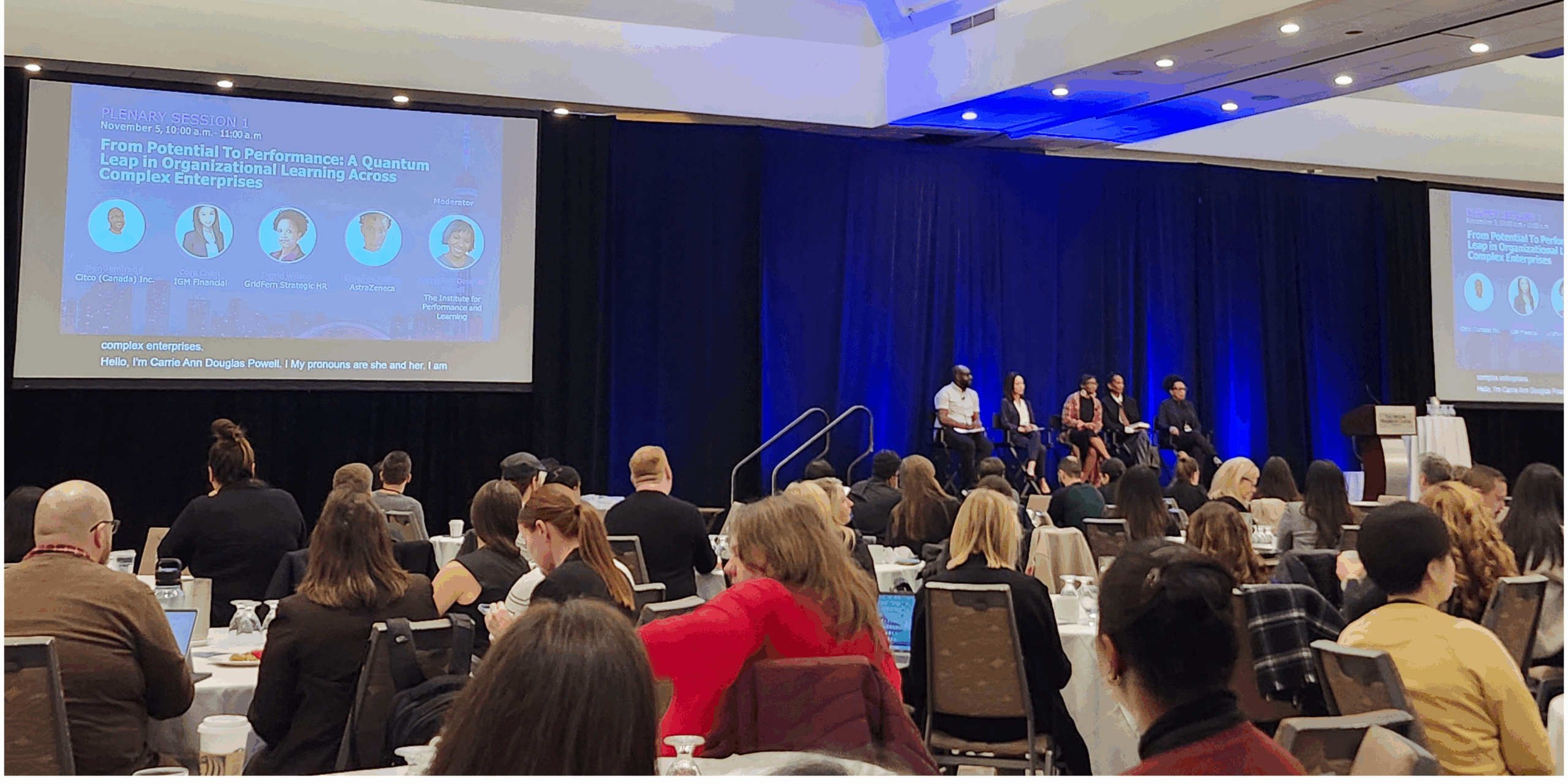
I recently attended the I4PL—The Institute for Performance and Learning—2025 conference, and it offered a valuable opportunity to step back, listen, and reflect on the evolving landscape of Learning and Development (L&D). While the sessions covered a broad range of topics—from AI and storytelling to measurement, accessibility, leadership, and diversity—several themes consistently surfaced across the discussions.
These themes are deeply connected to the work many of us do in L&D, Instructional Design, and change enablement. They highlight not only how our field is shifting, but how we can better support learners, leaders, and organizations in a time of rapid change.
Below are five insights that stood out to me, along with reflections on why they matter and how we might apply them in our practice.
1. Psychological Safety Is the Foundation of Learning
One of the strongest messages running through multiple sessions was that people learn best when they feel safe—safe to ask questions, safe to experiment, safe to get things wrong without judgment. Trust and psychological safety are not “soft” elements; they are concrete learning conditions.
The conference highlighted several ways we can support this:
-
Provide multiple methods of participation (chat, polls, verbal sharing, small groups, quiet reflection).
-
Reduce the cognitive load by creating structured, predictable learning experiences.
-
Use tools like captions to increase inclusion and accessibility.
-
Signal early that uncertainty and curiosity are welcomed.
A meaningful addition to this discussion is the role of neurodiversity. Neurodiversity-informed design—such as offering clear instructions, step-by-step structure, reduced ambiguity, and flexible engagement—supports learners who think or process information differently. But the real insight is this: these strategies benefit everyone, not just neurodivergent learners.
When we design learning that feels safe, we help people lean in rather than hold back.
2. L&D Must Be Part of Change—Not an Afterthought
Another consistent theme was the reminder that L&D should be involved early in any change initiative. When learning is added only at the end, we often end up designing in a hurry or expecting learners to absorb too much too quickly.
Effective learning during change requires:
-
Early alignment with the change story and organizational goals
-
A modular learning strategy that evolves with the project
-
Reinforcement plans built in from the beginning
-
Leaders modelling the behaviours and mindset required for the change to succeed
Whether an organization is implementing technology, restructuring teams, or introducing new processes, the message was clear: L&D is not just a support function—it’s an enabler of readiness and adoption.
3. Measurement Needs to Focus on Meaningful Impact
Many L&D teams still measure what is easy to track rather than what truly matters. Attendance numbers and satisfaction scores have a place, but they tell us little about learning impact.
Sessions emphasized the importance of:
-
Defining success measures early
-
Gathering baseline data before learning begins
-
Tracking behaviour change, not just knowledge
-
Using data to inform decisions and shape next steps
-
Telling a clear story about the data so leaders understand the implications
Data doesn’t need to be complicated; it needs to be purposeful. When we anchor measurement to real behaviour and performance expectations, learning becomes more strategic and more valuable.
4. AI and Storytelling Are Transforming Instructional Design
AI was a prominent topic across the conference, and the discussion went far beyond efficiency. What stood out most was how AI can enhance creativity, especially in scenario design, storytelling, and adaptive learning pathways.
AI can support:
-
Persona creation
-
Scenario branches
-
Case studies with realistic emotional nuance
-
Visuals and dynamic content
-
Alternative pathways based on learner input
But the takeaway was not that AI replaces L&D professionals. Instead:
AI doesn’t replace our expertise—it amplifies it.
Our critical thinking, experience, and questions directly shape the output we receive. AI becomes a collaborator, not a shortcut.
Storytelling—especially when aligned with real learner contexts—remains one of the most powerful tools for helping people build judgment, confidence, and practical understanding.
5. Power Skills Are the Skills of the Future
Many sessions reinforced what we are already seeing in the workplace: “soft skills” are no longer soft. Skills like adaptability, collaboration, communication, discernment, problem-solving, and curiosity are essential to thriving in a fast-changing environment.
These skills also directly support change adoption and continuous learning.
A particularly important layer is understanding how different people process information, regulate emotions, and approach problem-solving. Recognizing neurodiversity strengthens our ability to support teams in building these essential skills in more relevant and sustainable ways.
Power skills are not optional; they are foundational to high-performing, future-ready teams.
Final Reflections: The Future of L&D Is Human-Centred
Across all the sessions I attended, what stayed with me the most was not the technology—it was the humanity behind effective learning.
The future of L&D requires us to:
-
Design learning that is inclusive, accessible, and grounded in real performance needs
-
Create environments where learners feel safe to explore and grow
-
Use measurement to drive meaningful improvement
-
Leverage AI thoughtfully to enhance creativity and deepen learning
-
Recognize that people think and learn differently—and design for that diversity
It is an exciting time to be part of the L&D field. The work we do shapes how people adapt, connect, and succeed in moments of change. And as the landscape continues to evolve, our opportunity to create meaningful, human-centred learning has never been greater.
Related Videos
At Regier Education Inc., I’m committed to helping trainers, facilitators, and organizations create inclusive, accessible, and engaging learning experiences—whether in live sessions, or self-directed online courses.
If you’d like to explore more, here are some of my top resources: Accessibility & Inclusion YouTube Playlist
Alternatively, connect with me to explore how Regier Education Inc. can enhance your learning experiences with accessibility and inclusivity from the outset.
I have a reading list of new books about accessibility, inclusion and neurodiversity. Stay tuned for new tips and recommendations on these reads!
Patricia Regier
Founder, Regier Education Inc.
Learning Experience and Instructional Designer | Facilitator | Consultant | Author of The Online Shift: 101 Pro Tips for Facilitators, Workplace Trainers & Speakers
https://www.regiereducation.com
BONUS
In case you missed it: Don’t Hear What I Didn’t Say, Accessible Learning Design, Zoom’s new Hand Gestures, Using AI as a writing partner, First look at Canva’s new features, Leveraging YouTube
Additionally, I typically post a video weekly, and they may be expanded into blog posts and articles. To view the latest tutorials and pro tips, subscribe or check out my YouTube channel.
Take our Learning Types Quiz
About the Author
Patricia Regier, MEd is the Online Expert who’s built a career on the belief that training and online learning doesn’t have to be boring. As Owner of Regier Education Inc. and with a Master of Adult Education, Patricia is known for making her audience feel empowered, engaged, courageous and confident. Her debut book and keynote, The Online Shift teaches newcomers to the online space and seasoned professionals alike how to optimize their online presence and maximize engagement. She’s tried, tested and refined using the latest behavioral science, research and psychology to make sure your next online experience is a hit!
To request more information about learning and development opportunities or book Patricia as a speaker, facilitator, consultant, or instructional designer email [email protected]
Images’ rights and license to use via Canva Pro account.