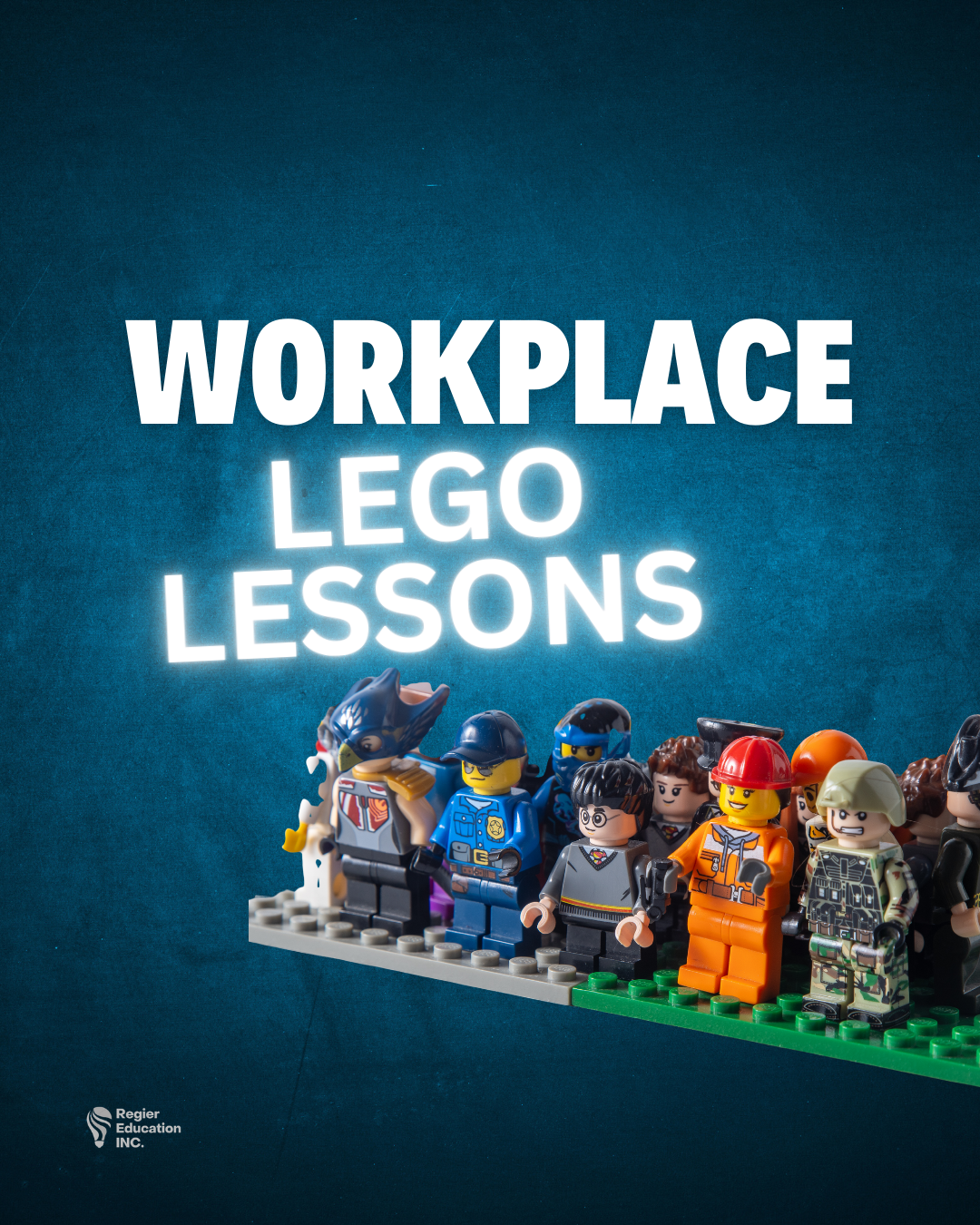
My First LEGO Set: Lessons in Learning, Collaboration, and Building Something New
I recently built my first LEGO set — and it was far more fun (and thoughtful) than I expected.
What surprised me most wasn’t just the final creation, but how many learning and life lessons showed up along the way. The process itself felt deeply familiar, especially when I thought about collaboration, program development, workplace learning, and the kind of training design and facilitation work I do every day.
Go Slow. Follow the Steps. Trust the Process
LEGO forces you to slow down.
You move page by page, step by step, often without fully seeing what the final result will look like. You’re building from the ground up, and not every instruction breaks down every detail. Sometimes there’s a learning curve — figuring out how pieces fit together just enough to click, but gently enough not to break what you’ve already built.
That “click,” by the way? Very satisfying. 😊
This felt strikingly similar to learning and program development work. Whether we’re designing training, onboarding a new system, or building a new initiative, we don’t always see the outcome right away. Early stages can feel abstract or disconnected until enough pieces come together. Progress often becomes visible only after patience and persistence.
When Something Feels “Missing,” Look Again
There were moments when I thought I was missing a piece. But more often than not, I needed to flip pieces over, look at them from a different angle, or reconsider what I thought I was seeing.
Sometimes it wasn’t that a piece was missing — it was user error. The piece had fit somewhere else, so it looked and felt correct at that point.
A few times, I swapped a piece with a spare because the image was hard to read or the colours were tricky to distinguish. Other times, I realized I was taking the picture too literally. LEGO instructions don’t always use arrows or explicit directions — you’re expected to notice what looks different and figure it out.
This happens constantly in collaborative work, onboarding with new technology and in learning design. When something “isn’t working,” the issue is often not the task in front of us, but a misunderstanding or missed assumption from earlier in the process. In team-based work, those moments are rarely about blame — they’re about sense-making together.
You Can’t Skip Steps (and Fix It Later)
My experience with building LEGO taught me that you can’t skip steps and come back later — a lesson that can be helpful to accept and work through.
If something is slightly off, you may need to remove a piece — carefully — and adjust what you just placed. Taking pieces off is a delicate task. Sometimes the fix is simple. Sometimes it means going back several steps before moving forward again. This felt like a perfect metaphor for program development and workplace learning.
Learning is also about building on what we already know and have experienced. At the same time, progress often requires unlearning — letting go of assumptions, habits, or ways of thinking that no longer fit. With LEGO, that might mean realizing a piece was placed based on what you thought you saw, not what was actually needed. In workplace learning, unlearning bias or outdated approaches is often what allows new understanding to take hold.
When we run into a problem and think something is broken or missing, the solution often requires going backwards first. We need to unpack the process, revisit decisions, and understand where something went off track before we can move forward with confidence. Skipping foundational steps — alignment, shared understanding, and learner context — almost always shows up later as rework.
Learning, Collaboration, and Building Together
What stood out most to me is how closely this mirrors collaboration.
In my Master’s thesis research, I explored how people learn to collaborate and build successful new programs. One consistent theme was that collaboration isn’t linear. It involves experimentation, adjustment, curiosity, and moments of uncertainty — often surfacing several steps after a decision was made.
Building new programs often requires multiple course corrections or pivots. That is just part of the process of discovery and innovation.
LEGO reinforces this in a very tangible way. When something doesn’t fit, forcing a solution rarely works. Pausing, revisiting earlier steps, and talking through what may have been misunderstood is usually what moves things forward. That’s true whether you’re building with bricks or building programs with people.
Close-Up Work, Big Picture Results
When you’re building LEGO, your focus is on the close-up view — one piece at a time.
Then gradually, you start to see the shape emerge. And at the end, you can step back and fully appreciate the final result.
But with LEGO, the fun isn’t only in the finished build — it’s in the process itself. The journey matters just as much as the destination.
That resonates deeply with how I approach learning design and facilitation. Effective workplace learning isn’t just about the end outcome or deliverable. It’s about how people experience the process — the pacing, clarity, problem-solving, and collaboration along the way.
What LEGO Reminds Me About Facilitating Workplace Learning
As someone who designs and facilitates learning across many contexts — online, in-person, hybrid, structured programs, and self-directed learning — this LEGO experience felt surprisingly familiar.
Facilitating learning is rarely about giving people perfect instructions. It’s about creating the conditions where learners and teams can:
Try
Adjust
Ask questions
Revisit earlier assumptions
And build understanding together
Just like LEGO, learners don’t always see the full picture at the start. They rely on guidance, visual cues, prior experience, and collaboration with others to make sense of what they’re building. Sometimes the breakthrough comes several steps later — and that’s not failure. That’s learning.
LEGO, Learning Design, and Neurodiversity
Another layer that stood out to me while building this LEGO set was how naturally it highlights and supports neurodiversity in learning.
Not everyone processes instructions, visuals, spatial relationships, or sequencing in the same way. Some learners need to flip pieces over, revisit images, or take more time to interpret what they’re seeing. Others may not notice a missed step until several steps later — and that doesn’t mean they’re doing anything wrong.
While building LEGO, I had the space and time to process information at my own pace. That same time and space are important to build into learning as well — allowing learners to pause, adjust, and make sense of information through exploration. That’s a powerful reminder for workplace learning.
In learning design — especially for self-directed and facilitated environments — confusion is often treated as failure, when it’s actually part of how learning happens. Inclusive and neurodiversity-informed design anticipates this. It builds in clarity, flexibility, and permission to go back without judgment.
When learners are supported to revisit steps, ask questions, and approach problems from different angles, learning becomes more accessible — and collaboration becomes stronger.
At one point, when I couldn’t see what was different between my build and the picture, I knew something wasn’t quite right. I asked my husband — a LEGO expert — to take a look. He immediately saw the issue from a different perspective. That moment reinforced how much I value diverse ways of thinking and the insight that comes from different brains seeing things differently.
Learning, Curiosity, and the Role of Fun
One unexpected part of this LEGO experience was how much fun it was.
That sense of play, even as an adult, matters. When learning feels enjoyable, people are more patient with themselves. They’re more willing to be curious, experiment, make adjustments, and try again without frustration. The satisfaction of small progress — like the familiar LEGO “click” — builds momentum and confidence.
This is something I see consistently in workplace learning. When learning environments feel safe, human, and engaging, people are more curious. Fun doesn’t mean a lack of depth. It means curiosity is supported, mistakes are normalized, and learning feels possible.
Whether in facilitated sessions or self-directed learning, engagement helps lower the pressure to “get it right” immediately. It creates space for exploration — and that’s often where the most meaningful learning happens.
Final Reflection
I didn’t expect my first LEGO set to spark this much reflection — but here we are.
A big thank you to my family for the gift 💕
And a reminder to myself (and maybe to you too): when something isn’t working, it may not be about the piece in front of us. It may be about a step we missed earlier — and that’s okay. Learning often requires time, space, and sometimes a different perspective. We can go back, adjust, and move forward again.
And great learning experiences are often what help everything click. 🧱✨
Related Video & Podcast
At Regier Education Inc., I’m committed to helping trainers, facilitators, and organizations create inclusive, accessible, and engaging learning experiences—whether in live sessions, or self-directed online courses.
If you’re exploring how people-first, inclusive learning can better support your learners or teams, I’d love to continue the conversation.
If you’d like to explore more, here are some of my top resources: Accessibility & Inclusion YouTube Playlist
Alternatively, connect with me to explore how Regier Education Inc. can enhance your learning experiences with accessibility and inclusivity from the outset.
I have a reading list of new books about accessibility, inclusion and neurodiversity. Stay tuned for new tips and recommendations on these reads!
Patricia Regier
Founder, Regier Education Inc.
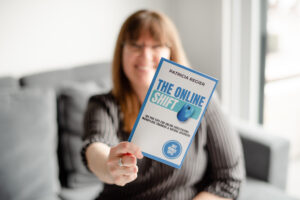
Learning Experience and Instructional Designer | Facilitator | Consultant | Author of The Online Shift: 101 Pro Tips for Facilitators, Workplace Trainers & Speakers
https://www.regiereducation.com
BONUS
In case you missed these:
- Hot Topics 2025 and What That Tells Us for 2026
- Future of L&D (I4PL reflections) , CAUCE reflections,
- Zoom’s new Hand Gestures, First look at Canva’s new features,
- Leveraging YouTube, Using AI as a writing partner,
- The Neurodiverse Workplace, Don’t Hear What I Didn’t Say, Accessible Learning Design,
Additionally, I typically post a video weekly, and they may be expanded into blog posts and articles. To view the latest tutorials and pro tips, subscribe or check out my YouTube channel.
Plus, you can take our Learning Types Quiz
These insights continue to shape how I approach learning design — and I’m always open to conversations about what people-first learning looks like in practice.
About the Author
Patricia Regier, MEd is the Online Expert who’s built a career on the belief that training and online learning doesn’t have to be boring. As Owner of Regier Education Inc. and with a Master of Adult Education, Patricia is known for making her audience feel empowered, engaged, courageous and confident.
Her debut book and keynote, The Online Shift teaches newcomers to the online space and seasoned professionals alike how to optimize their online presence and maximize engagement. She’s tried, tested and refined using the latest behavioral science, research and psychology to make sure your next online experience is a hit!
To request more information about learning and development opportunities or book Patricia as a speaker, facilitator, consultant, or instructional designer email [email protected]
Images’ rights and license to use via Canva Pro account.