
Training matters — but meaningful change requires more than information sharing.
As someone who designs and facilitates workplace learning, I genuinely believe in the value of training. Good training can build confidence, increase understanding, reduce anxiety, and create shared language and expectations. It can help people feel more prepared and supported during times of change.
At the same time, one thing I have learned through leading and supporting learning, projects, programs, and change is this:
Training alone rarely creates lasting change.
Not because people are resistant, disengaged, or unwilling to learn.
Often, it is because organizations unintentionally expect training to do more than it realistically can.
Sometimes, training gets treated like the solution:
“We communicated the change.”
“We offered training.”
“People attended.”
And yet, people still struggle to apply what they learned, confidence remains low, questions continue, or adoption moves slower than expected.
Why?
Because learning and change are connected — but they are not the same thing.
Before training: understanding the change
One of the most important questions is often overlooked:
What change are we actually trying to support?
Before building training, it helps to step back and ask:
- How significant is the change?
- What behaviours, processes, or workflows are shifting?
- What is the impact on employees?
- What concerns, barriers, or competing priorities exist?
- How ready are people for change?
Not all change requires the same level of support.
A small process update is very different from a major systems implementation, role redesign, or organizational transformation.
This is where understanding change readiness becomes important.
A readiness ruler approach — often used in behaviour change conversations — can be a helpful reminder that people may be at very different stages of confidence, readiness, or willingness to adopt something new.
Some people are eager and curious.
Others may feel uncertain, overwhelmed, skeptical, frustrated, or simply stretched thin.
And for many people, an important question sits quietly in the background:
Why should I care?
What does this mean for me?
Understanding impact matters.
Communication before, during, and after change helps people make sense of what is happening, why it matters, and how they will be supported.
Readiness also shifts.
Someone may feel hesitant before change, more engaged during implementation, and highly motivated once the change directly impacts their day-to-day work.
Training works best when it is designed with the human experience of change in mind.
Include people in the change — not just the training
People are more likely to support change when they feel heard, informed, and included.
Whenever possible, it helps to involve the people impacted by change early in the process.
This may include:
- gathering feedback and concerns
- understanding barriers and questions
- involving end users in planning conversations
- piloting or testing training resources
- gathering feedback before rollout
- identifying what support people actually need
People closest to the work often see practical realities, risks, and opportunities that others may miss.
Involving people early can build trust, reduce anxiety, improve readiness, and strengthen implementation.
Sometimes, simply feeling heard makes a meaningful difference.
This does not mean every concern can be solved or every decision changes.
But listening matters.
And often, better implementation happens because people helped shape the process.
Timing matters: practice should happen close to application
Sometimes organizations offer training very early in a project timeline:
People attend training.
They check the box.
And then weeks — or even months — pass before they actually need to apply what they learned.
By then, much of the learning has faded.
This is not a reflection of motivation or ability.
It is simply how learning works.
When possible, training and practice opportunities are often most effective when they happen close to implementation and real-world application.
Even better?
Giving people opportunities to practice during training — or shortly afterward — can make a significant difference in confidence and retention.
Learning becomes stronger when people can:
- apply skills quickly
- make mistakes safely
- ask questions in context
- receive coaching and feedback
- connect learning to their actual work
People also learn differently, especially during times of change. Offering different ways to engage with learning and support can help people feel more confident and included as they adapt.
The goal is not simply completing training.
The goal is helping people feel prepared and supported when it matters most.
Implementation is not the end of learning — it is often the beginning
One common misconception is treating implementation or “go live” as the finish line.
Training happens.
People attend.
The system launches.
And support begins to disappear.
But in reality?
Implementation is often where the real learning begins.
This is the moment when people start applying learning in real contexts, under real pressures, with unexpected variables and questions that training could not fully anticipate.
This is often when attention increases too — because the change is now real.
People often need support after implementation through:
- coaching and encouragement
- quick-reference guides or job aids
- short videos or refreshers
- just-in-time learning resources
- opportunities to ask questions
- peer support and troubleshooting
Learning does not stop at launch.
In many ways, this is when learning becomes real.
Training as part of a broader change and implementation strategy
Many change models, including the ADKAR model (Awareness, Desire, Knowledge, Ability, and Reinforcement), recognize that awareness and knowledge are only part of the journey. Understanding what to do does not automatically create confidence, ability, or reinforcement.
That does not reduce the importance of training.
It simply helps us see training more realistically.
Training is often most effective when it is connected to communication, readiness, leadership support, implementation planning, opportunities to practice, reinforcement, coaching, and trust.
The strongest learning experiences begin with understanding the change needed, the people impacted, and how they will be supported before, during, and after implementation.
Final thoughts
I still believe deeply in training.
I have seen meaningful learning experiences build confidence, reduce frustration, create connection, and help people move through uncertainty.
But training works best when we stop expecting it to do everything on its own.
Meaningful change happens when learning is supported — not isolated.
And maybe that is the shift:
Moving from asking:
“Did we provide training?”
to asking:
“How are we supporting people through change?”
A few questions to consider before building training
Before creating your next training session, course, or rollout, pause and ask:
☐ What change are we actually trying to support?
(Is this a knowledge gap, behaviour change, process shift, or something else?)
☐ What do people need to understand, feel, and practice to be successful?
(Information alone is rarely enough.)
☐ Have we included the people impacted?
(What concerns, questions, or ideas have we heard?)
☐ When will people actually apply this learning?
(Is training close enough to implementation to stick?)
☐ What support exists after training?
(Coaching, job aids, quick references, just-in-time learning, or opportunities to ask questions?)
Sometimes better training is the answer.
Sometimes better support is the answer.
Often, meaningful change requires both.
Video and Podcast
About Regier Education Inc.
At Regier Education Inc., I help trainers, facilitators, leaders, and organizations create inclusive, accessible, and meaningful learning experiences that support people through learning, change, and implementation.
Through practical strategies, learner-centred design, facilitation, and real-world reflections, I explore topics related to workplace learning, instructional design, accessibility, learner engagement, change readiness, and meaningful implementation support.
Whether learning happens in live sessions, hybrid environments, or self-directed online experiences, my focus remains the same:
Helping people feel more confident, supported, and engaged in the learning process.
Continuing the Conversation
I regularly share practical tools, reflections, tutorials, and workplace learning insights, including topics such as:
- Workplace learning and facilitation
- Learning experience design
- Change readiness and implementation support
- Accessibility and inclusive learning
- Neurodiversity in the workplace
- Artificial intelligence (AI) and learning tools
- Leadership and collaboration
- Workplace technology and practical tutorials
You may also enjoy:
- Workplace Tech Tips + latest tutorials and tips videos
- Lego Lessons that apply to workplace training and collaboration
- Future of Learning and Development (L&D) Reflections
- CAUCE Conference Reflections,
- Using Artificial Intelligence (AI) as a writing partner,
- The Neurodiverse Workplace
- Don’t Hear What I Didn’t Say
- Accessible Learning Design
I regularly share videos, podcasts, blogs, and practical reflections related to workplace learning and learner experience design.
You can also explore the Learning Types Quiz or subscribe to my YouTube channel for practical tips, tutorials, and reflections.
About the Author
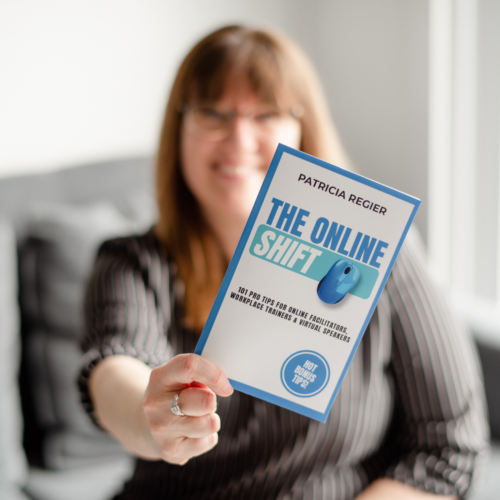
Patricia Regier, MEd is a Learning and Organizational Development professional, Learner Experience Designer, Facilitator, Speaker, and Author of The Online Shift: 101 Pro Tips for Facilitators, Workplace Trainers & Speakers.
Through Regier Education Inc., Patricia supports organizations, trainers, and facilitators in creating engaging, accessible, and people-centred learning experiences that help learners feel supported, confident, and ready to apply what they have learned.
Drawing from experience in workplace learning, facilitation, instructional design, leadership, and implementation, Patricia shares practical strategies grounded in adult education, learner experience, accessibility, and meaningful engagement.
To learn more about learning and development opportunities, speaking, facilitation, consulting, or instructional design support, contact:
Patricia Regier
Founder, Regier Education Inc.
Learning and Organizational Development | Learner Experience Designer | Facilitator | Speaker | Author
Images’ rights and license to use via Canva Pro account.